
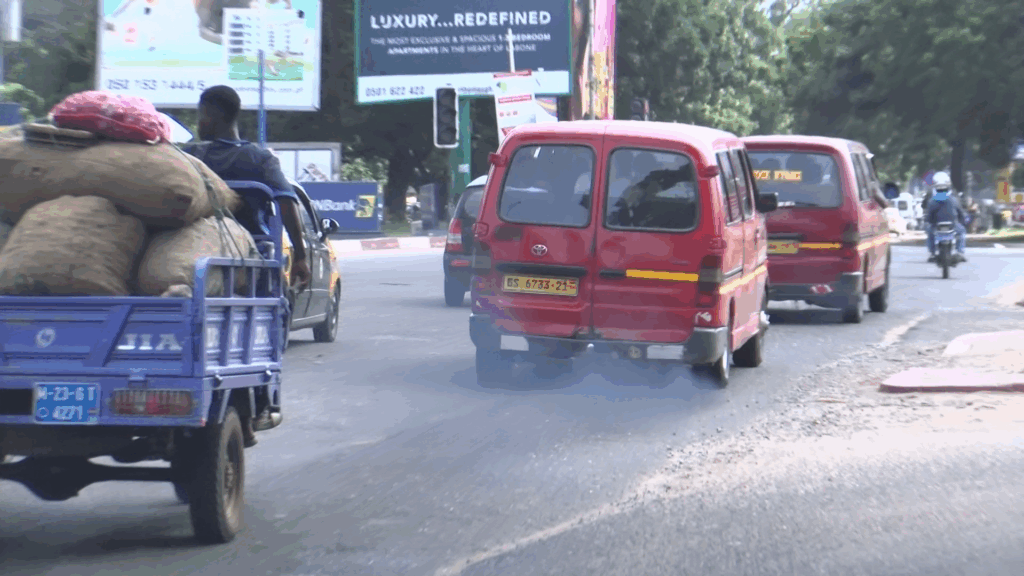
Two decades of air quality data from Accra reveal a troubling trend: while households are slowly moving away from wood and charcoal, waste burning is erasing those gains and putting millions at risk.
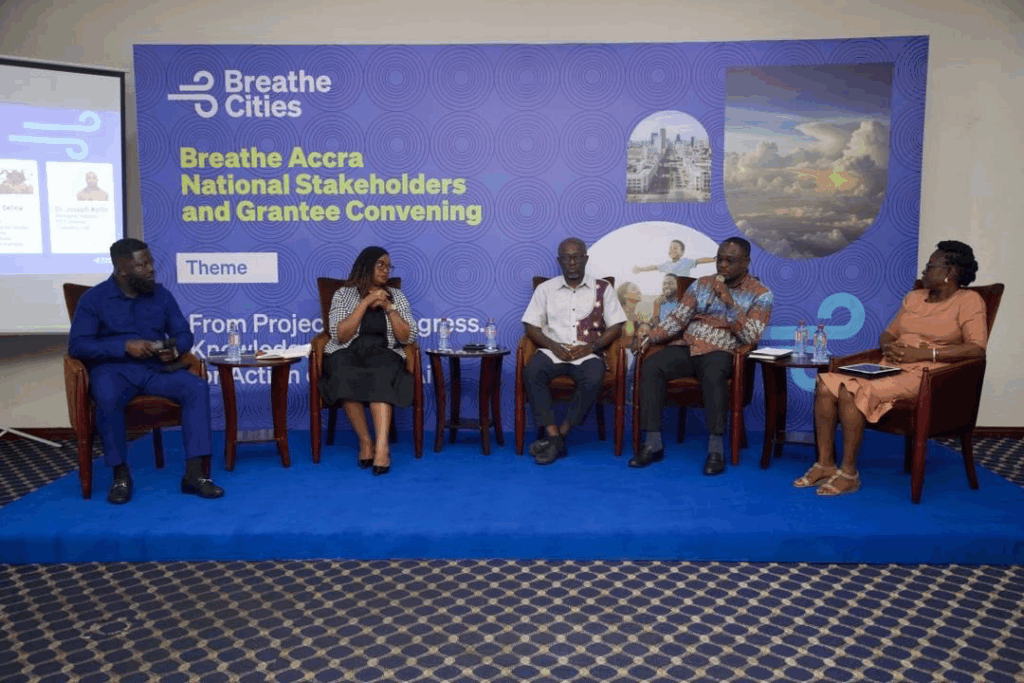
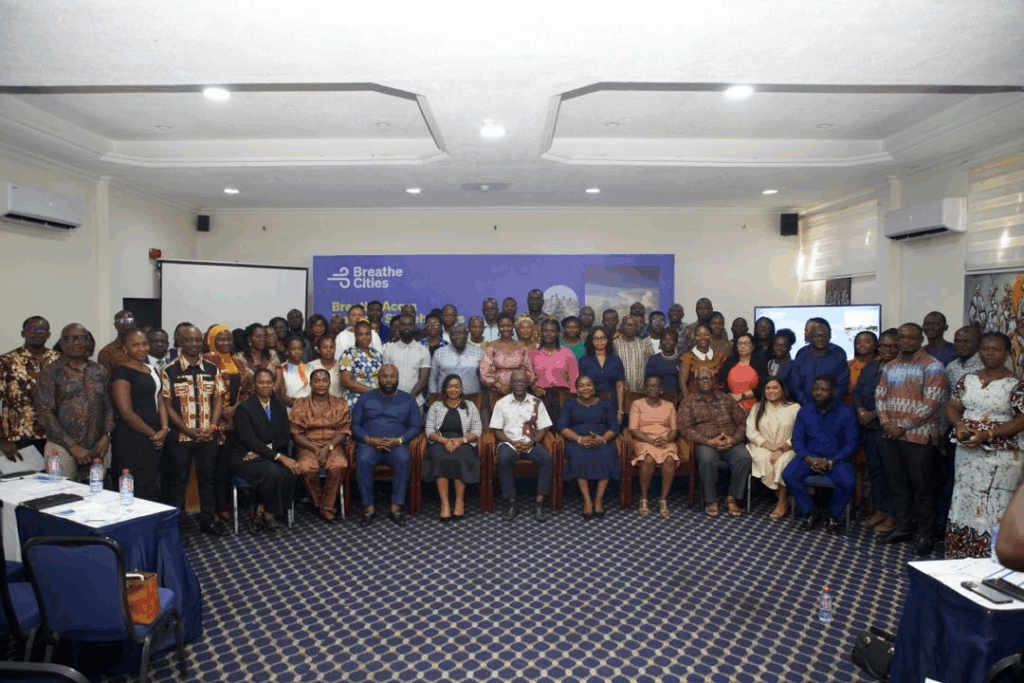
That warning, delivered by leading researchers, shaped deliberations at the 2025 Breathe Accra National Stakeholder Convening, which aimed to turn scientific findings into real policy action.
A 20-year analysis shows stalled progress — and a new threat
Associate Professor of Environmental Health Sciences, Dr Raphael Arku, whose team has monitored pollution sources for 20 years, said the city’s major contributors have shifted in unexpected ways.
“What we have found is that the proportion that is coming from traffic remains the same. It hasn’t changed over the last 20 years,” he explained.
He noted that Ghana has made real gains in reducing emissions from wood fuel and charcoal.
“The one that is coming from biomass burning… that part has reduced significantly,” he said.
But those gains are being cancelled out by rising trash burning.

“We are also not doing well in trash collection. So people are now burning the trash… It’s making up for the gains that we make in biomass burning,” he said. “So that means we are not making much progress anymore.”
He stressed that addressing biomass burning, traffic emissions, and waste burning together would allow Ghana to “cut down air pollution more than half from the current level that we have right now.”
Columbia University’s Dr. Dan Westervelt said Ghana’s scrapped emissions levy had almost no measurable impact.
“We did not see any PM2.5 change between the post-levy period and the pre-levy period… very, very tiny,” he said.
Mapping Accra’s pollution hotspots: Jamestown, La, Abofu emerge as high-risk zones
PSS Urbania, a Breathe Accra grantee working across 13 districts, found severe sulphur dioxide levels in several communities.
“For 4 sites in 10 districts, SO₂ levels were very, very, very high,” they reported, linking the trend to open burning and light industry.
Their district analysis highlighted major disparities:
- In Jamestown, women involved in fish smoking reported high rates of air-quality-related illnesses.
- La (Labadi) was flagged as the highest-risk district: “Labadi… is a highly risky area… number one in all the districts.”
- Many schools have “open” compounds with no grass, leaving children heavily exposed to dust.
- In Abofu, a hub for meat processing, pollution levels were alarming: “We all like wele, but wele is killing us… SO₂, PM₂.5, they are all giving them.”
Backed by Breathe Cities: A global push for cleaner urban air
The research showcased was supported by Breathe Accra, part of the global Breathe Cities initiative, launched in Ghana in 2023. The programme funds scientific monitoring, capacity building, policy development, and community awareness in 13 districts.

A convening built for action: “From Projects to Progress”
This year’s event, themed “From Projects to Progress: Knowledge Sharing for Action on Clean Air,” brought together grantees, municipal authorities, national agencies, and international partners.
Breathe Accra Portfolio Manager Dr. Elvis Gyeabuor said the next priority is implementation.
“We are hoping we can see some more mainstreaming… and also the capacity to implement these policies,” he said.
Gyeabuor underscored the human cost: “Almost 32,000 people. It’s more deaths than are happening from accidents. It are more deaths from malaria, from HIV.”
Seneca Naidoo of the Breathe Cities Africa team applauded Accra’s cross-district coordination.
“This is not a problem that respects boundaries… And the fact that the city has been able to do that… is really, really a great achievement,” he said.
Health Ministry: Clean air is “non-negotiable”
A statement from Health Minister Mintah Akandoh positioned clean air as a core public-health priority.
“The health sector views clean air not just as an environmental issue but also as a non-negotiable public health imperative,” it said.
The ministry highlighted Breathe Accra’s role in mobilising partners to deliver data-driven solutions.
Hospitals overwhelmed with air-pollution illnesses — Ghana Health Service
A message delivered for Ghana Health Service Director-General Dr. Samuel Kaba detailed the growing clinical burden.
“Health facilities continue to record high numbers of respiratory… illnesses,” including asthma, acute infections in children, chronic coughs, and breathing difficulties.
Women working with biomass fuels face serious reproductive health risks — including “low birth weight, preterm birth and poor fetal growth.”
The Service called for better monitoring, stricter emissions enforcement, cleaner fuels, and stronger public education.
EPA announces new regulatory powers and updated national standards
A statement on behalf of EPA CEO Professor Nana Ama Browne Klutse said the new Environmental Protection Act, 2025 (Act 1124), marks a major shift.
The Act expands the EPA’s mandate, giving it broader regulatory and enforcement powers.
The Authority also highlighted new Air Quality Management Regulations (L.I. 2507), effective July 2025, and ongoing updates to national ambient air-quality and vehicle emissions standards.
“These standards are currently being reviewed… in accordance with best practice,” the statement said. A new national air-quality dashboard is also under development.
A turning point for Ghana’s clean-air movement
Despite the challenges, the convening showed alignment across science, health, government, civil society, and international partners.
Experts agree that tackling waste burning, weak enforcement, transport emissions, and urban planning gaps could cut pollution levels by half, prevent thousands of premature deaths, and reshape the future of Accra’s fast-urbanising landscape.
DISCLAIMER: The Views, Comments, Opinions, Contributions and Statements made by Readers and Contributors on this platform do not necessarily represent the views or policy of Multimedia Group Limited.
DISCLAIMER: The Views, Comments, Opinions, Contributions and Statements made by Readers and Contributors on this platform do not necessarily represent the views or policy of Multimedia Group Limited.